
Shift from program managers to architects of learning value.
Your Educational Product team translates your institution’s mission into the digital interfaces where learning actually happens. In the AI era, the traditional product management playbook is breaking. Simply adding a "chatbot" to a legacy LMS is not innovation—it’s technical debt.
The problem
When educational product development runs on "feature-parity" thinking, the institution loses its edge.
Roadmaps filled with "AI-dusting" that doesn't improve learning. High-cost engineering sprints that deliver low-impact tools. Fragmented learner data that provides no insight into why students are dropping out. A team stuck in "maintenance mode" because they lack the frameworks to lead through technological shifts.
These aren't "tech problems." They are symptoms of a team using 2010s software frameworks to solve 2020s learning challenges.
Who Enrolls
The builders responsible for the future of the learning engine.
Product Managers (Edtech & HEI)
Managing the transition from content-heavy platforms to agentic, outcome-driven ecosystems.
Learning Architects & Instructional
Designers Evolving from "content creators" to "system designers" who orchestrate AI-human collaboration.
Heads of Digital Transformation
Navigating the "Buy vs. Build vs. Tune" decisions for institutional AI integration.
Innovation Directors
Responsible for identifying new business models (e.g., subscription-based lifelong learning) and product-market fit.
UX/LX Designers
Designing for "Product-Led Growth" in education, where the product itself drives student persistence.
What your team builds
Participants don't study process theory. They surface a real problem from their own institution and build the solution.
The Product-Pedagogy Roadmap: A high-leverage redesign of an AI-native learning experience or innovation workflow—vetted for efficacy, stress-tested in the Sandbox, and ready to present at Demo Day. The institution owns the proprietary asset.
Example of deliverables
AI-Native Product Roadmap
A strategic shift from "feature-based" planning to "outcome-based" horizons, specifically mapped to your institution’s unit economics (LTV/CAC).
The Efficacy Diagnostic
A framework to audit your current product’s "learning-debt"—identifying where technology is hindering rather than helping the student.
The "Sandbox" Prototype
A low-fidelity, AI-powered feature or agent, tested against real learner data to validate the "Value-to-Effort" ratio before full-scale engineering.
The Institutional GTM Playbook
A blueprint for rolling out innovation to faculty and students, ensuring adoption isn't blocked by "innovation fatigue" or ethical concerns.
Future Education Sandbox
Where the work actually happens.
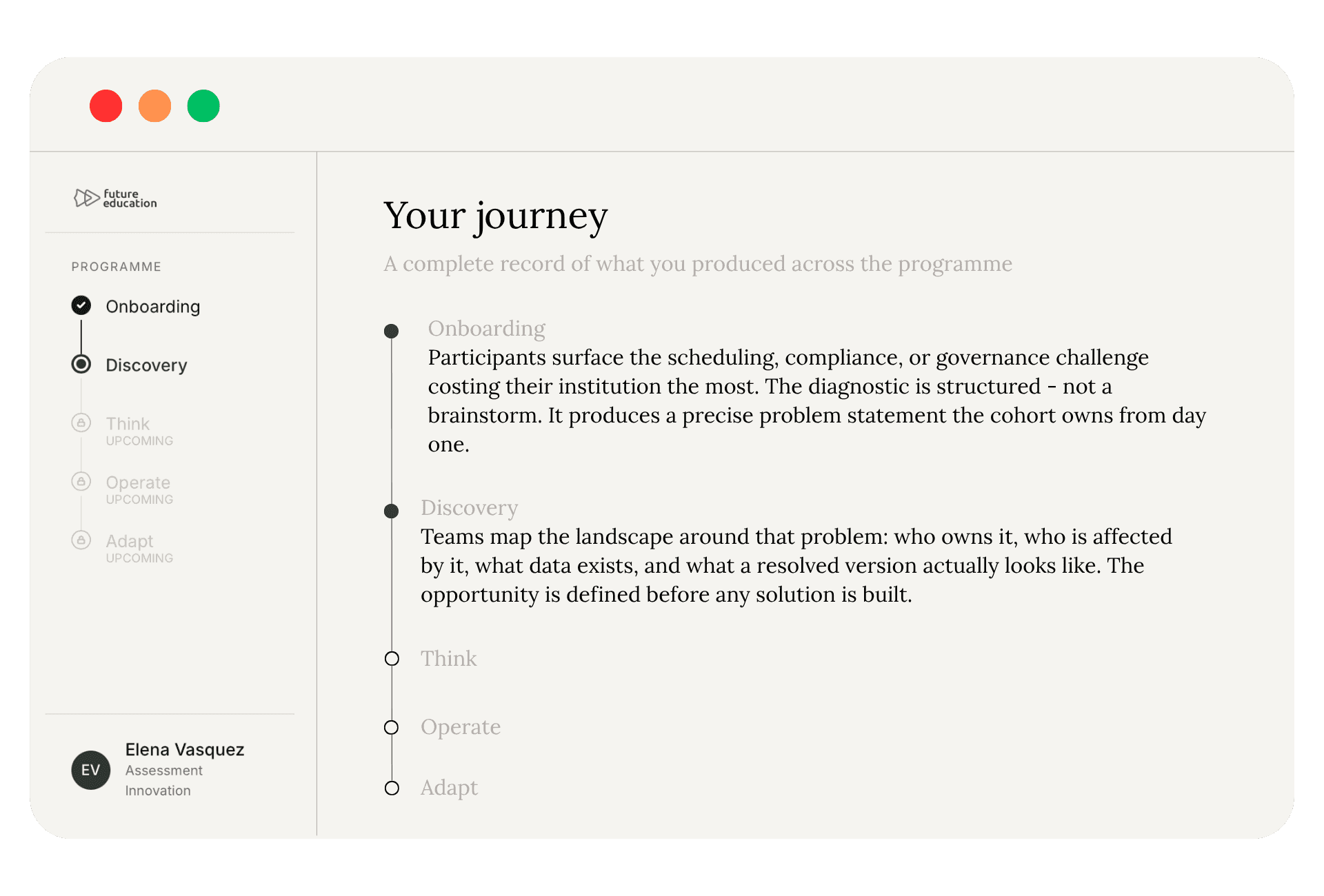
The Sandbox is Future Education's proprietary learning environment. It is where every cohort works - not a platform you buy, but the structured environment we bring to every program we run.
Think of it as the campus. The Academies are the programs. The Sandbox is where participants do the real work, supported by a facilitator and an AI mediator that helps them think - not one that thinks for them.
The Sandbox AI mediator never produces content for participants. Its role is to surface questions, challenge assumptions, and return the work to its institutional context.
We offer two delivery formats: fully remote or a hybrid blend of online and in-person sessions.
Inside every program
Real work.
Expert guidance.
Full visibility.
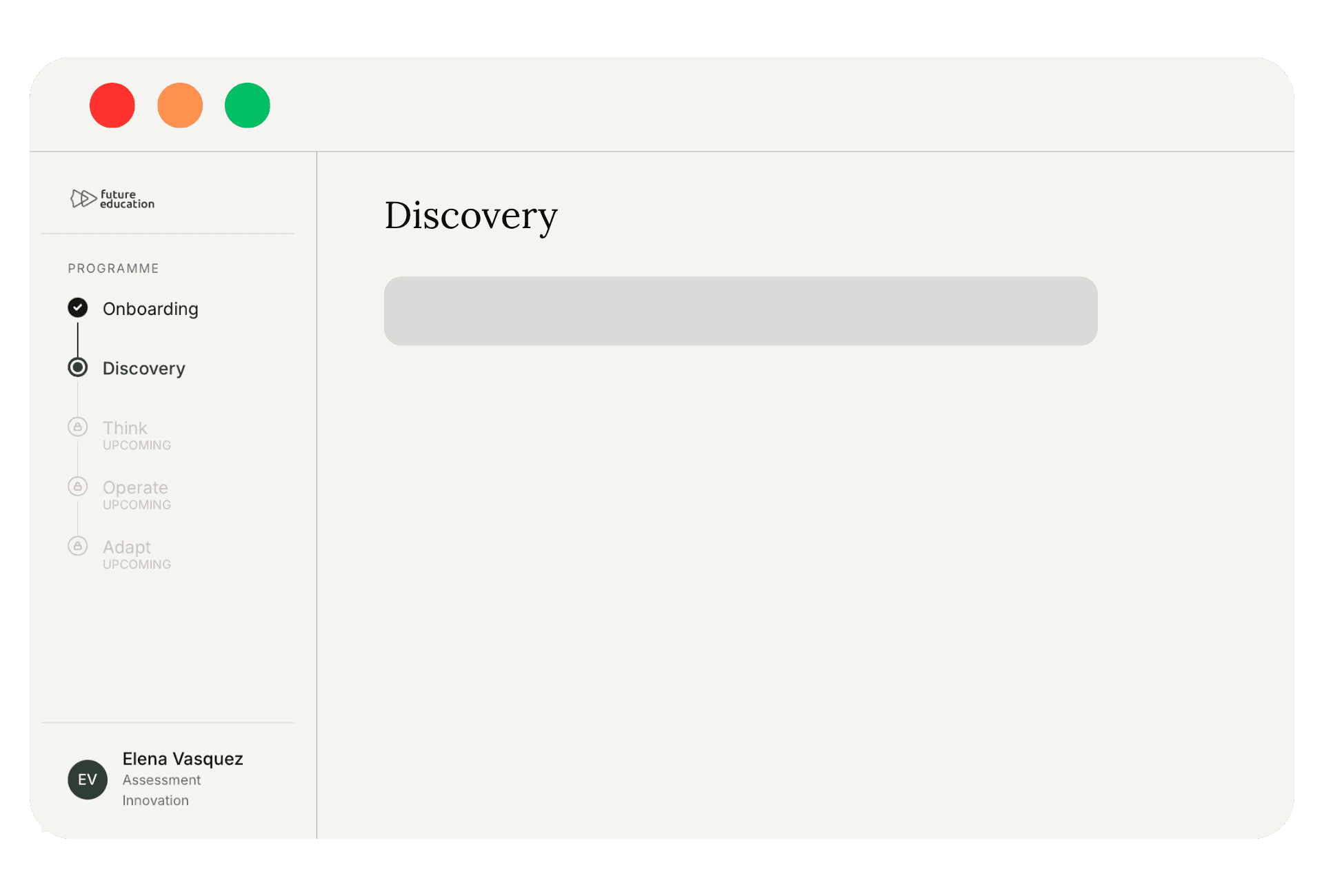
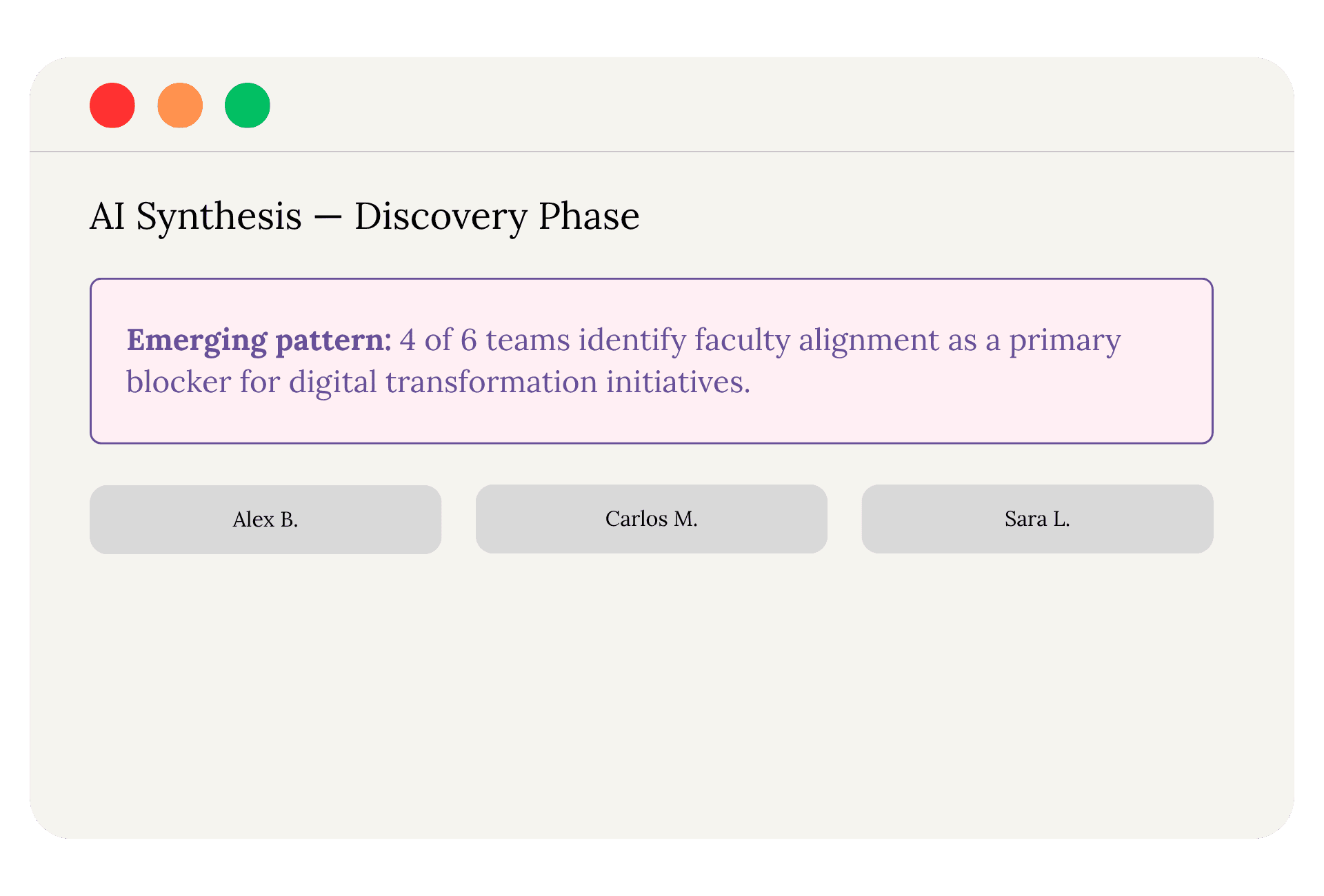
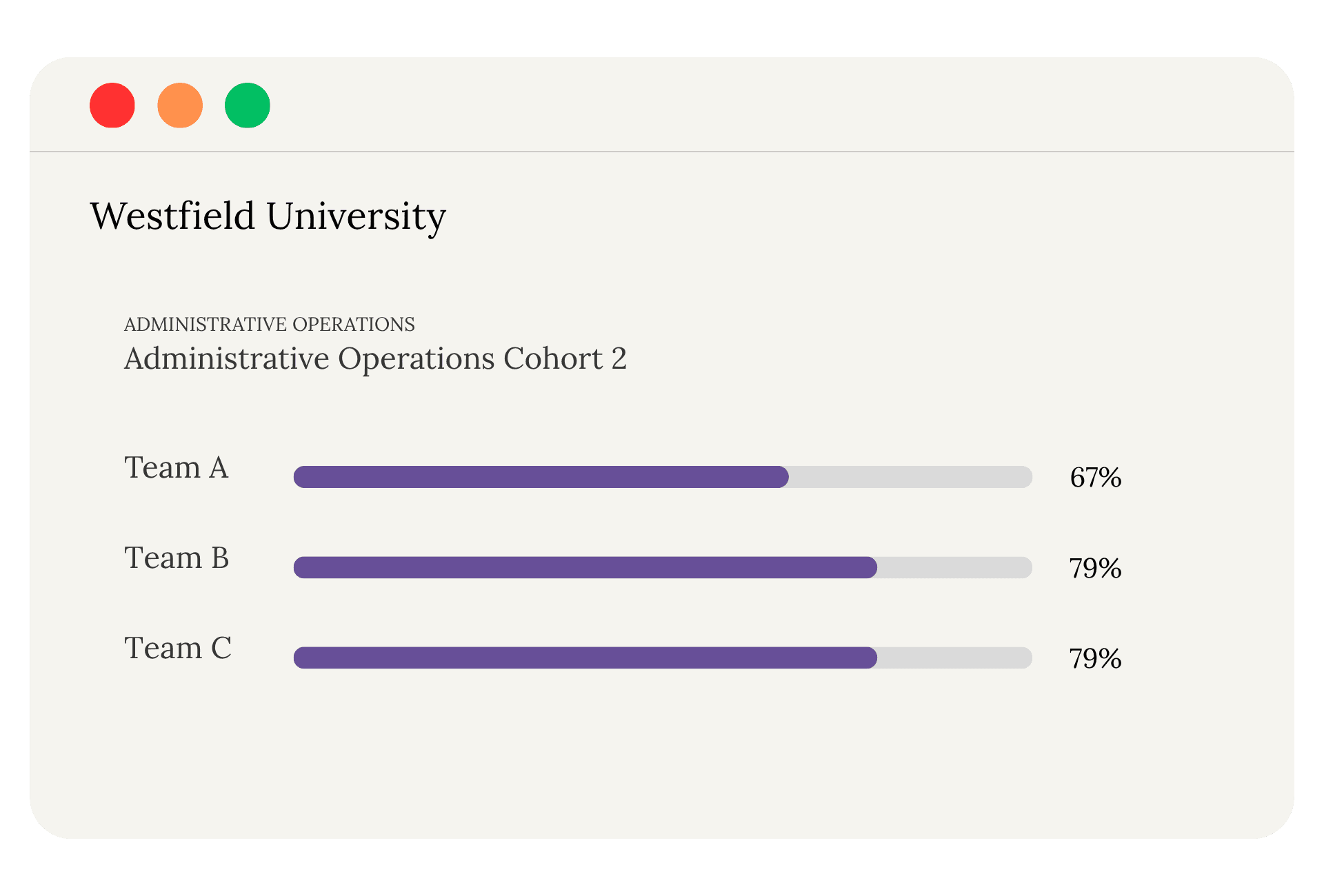
Future Education programs are not self-paced learning. Each cohort has a dedicated facilitator, a structured progression, and clear visibility for institutional leadership throughout. Every role has a defined function - and the work only moves when each one is doing theirs.
Why Future Education
Every program delivered across the academies carries the competencies as its quality standard. It is not a module. It is a permanent mindset architecture woven into how professionals learn, practice, and operate. Staff leave not just with new skills, but with a new way of seeing their work.
"After two decades in academic leadership, I believe in empowering people to transform their practices through systems of continuous improvement."

Prof. Msc. Juliana Mazzi
Founder of Future Education and Former Associate Dean


Which scheduling, compliance, or governance problem is costing your institution the most right now?
Fill out the form, and let’s talk about how we can support your institution with tailored learning solutions.

Start with one academy
By submitting this form you agree to our Privacy Policy. Optimum may contact you via email or phone for scheduling or marketing purposes.