The Staff Development Window Is Closing - And Most Institutions Have Not Opened It Yet
Digital Transformation
Editor's note
There is a particular kind of institutional paralysis that looks, from the outside, like deliberation. Committees meet. Working groups form. Digital strategies get approved. And then the people responsible for executing those strategies are handed a new platform and three hours of onboarding. Across Europe and the UK, the gap between institutional ambition and workforce capability is widening faster than most leaders are willing to acknowledge. The moment to close it was two years ago. The second-best moment is now.
Feature
In 2025, Gartner surveyed higher education CIOs across the sector and found that only 16% felt their leadership team was proficient at creating an innovation culture, and only 19% felt confident tracking and assessing disruptive trends. These are not gaps in technology. They are gaps in the people who are supposed to carry the technology forward. The same survey found that 97% of those CIOs planned to deploy generative AI within two years. The arithmetic is not reassuring: nearly every institution intends to execute a transformation that almost none of their leadership teams feels equipped to manage.
The pressure is arriving from multiple directions simultaneously. In the UK, the Quality Assurance Agency's 2024 report on higher education funding described a sector navigating serious financial strain, with institutions being asked to do more with constrained resources. Jisc's own digital strategy research, conducted with over 40 UK institutions in the period 2023-2025, found that the organisations making fastest progress in digital transformation were those that had invested early in staff capability - not in platforms. The timetabling failure documented at the University for the Creative Arts, examined in research presented at EUNIS 2025, is a sharp illustration of what happens when the reverse is true: a new technology is implemented without adequately preparing the people who must operate it, and the result is not a technology problem - it is a process and culture problem dressed in technical language.
Finland's CSC - IT Center for Science reached a comparable conclusion through a different route. Working with rectors of Finnish universities of applied sciences across a 2024 training series, CSC found that institutions' first instinct when confronted with AI transformation was to focus on technical applications - tools, policies, compliance. The deeper transformation, affecting how research, teaching, and administrative work is conceived and conducted, was consistently underaddressed. Their AITO Framework, developed to help HEIs map AI's effects across all institutional functions, emerged from a recognition that managing AI change requires a structured capability-building effort that begins at leadership level and cascades through the organisation.
The Deloitte 2025 Higher Education Trends report added a dimension that sits beneath most institutional conversations about transformation: leadership turnover in HEIs exceeded 20% between 2022 and 2024. Chief academic officers and chief human resources officers showed the highest rates. Institutions are losing the people most responsible for staff development at precisely the moment those people are most needed. What remains when a leader departs is not their successor's capability - it is the institutional systems, or lack of them, that were built during their tenure. Institutions that have not embedded structured professional development into their operating model find that every leadership change resets the clock.
The WEF's Future of Jobs Report 2025 put the workforce dimension in economic terms: on average, 59% of employees globally will need additional training to meet skill demands by 2030. In higher education, where the skills required to operate a transformed institution are fundamentally different from those that were sufficient to operate the previous one, the development deficit is not a future concern. It is a present one. A curriculum coordinator who does not understand process design cannot redesign the approval workflows that are slowing programme launches. An admissions team without data literacy cannot build the enrollment strategy the institution needs. A faculty member who has never engaged with learning analytics cannot improve outcomes using a platform designed to support that work.
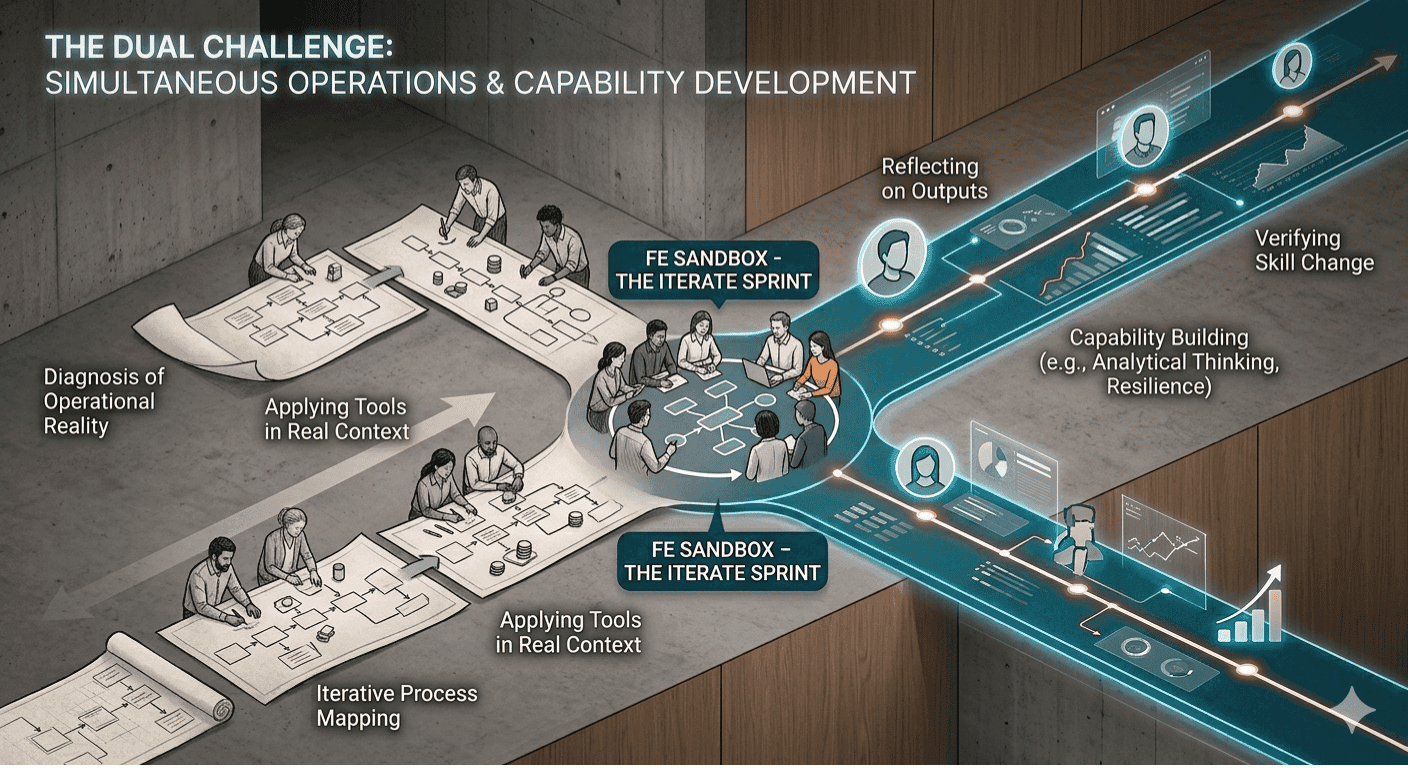
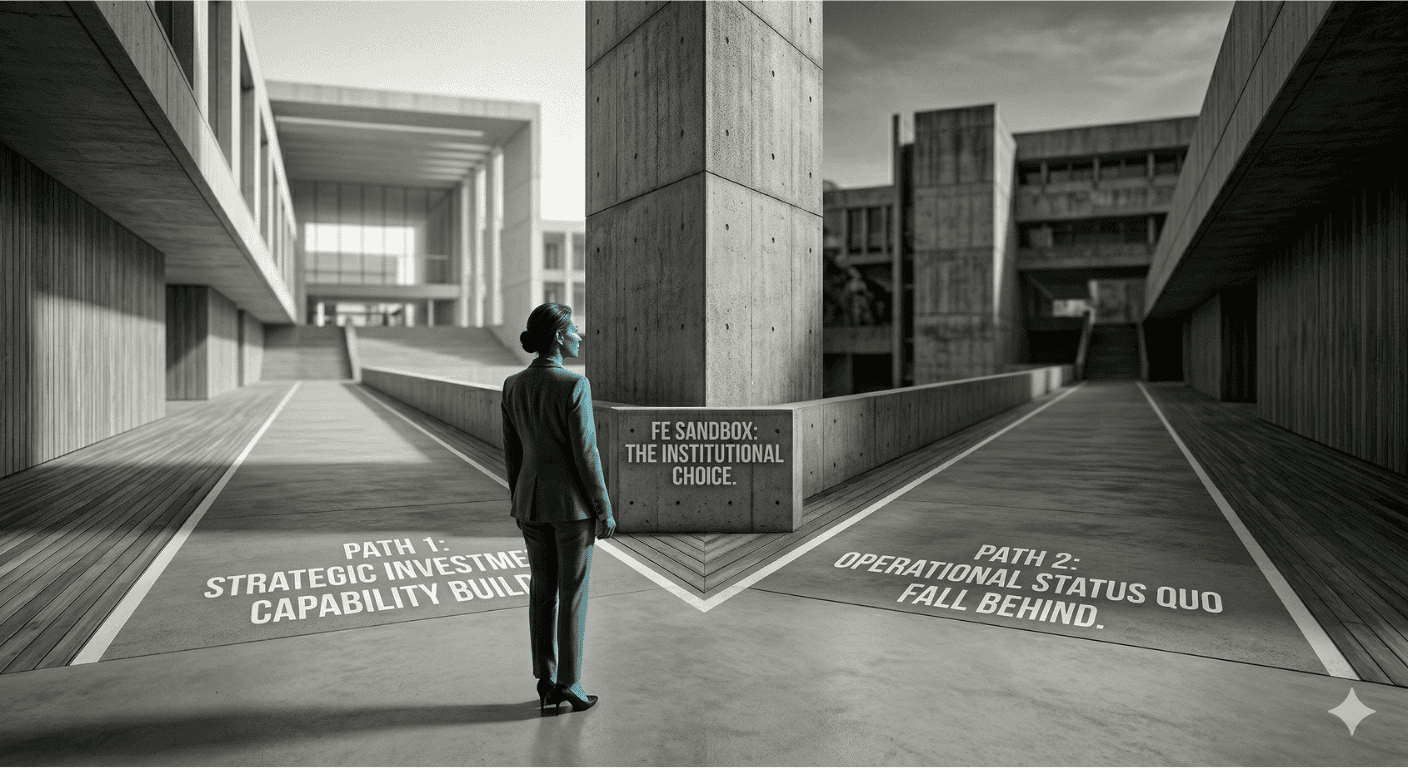
The institutions moving fastest are those that have made one conceptual shift: they have stopped treating professional development as a service provided to individuals on request, and started treating it as institutional infrastructure built for strategic purpose. That reframe - from benefit to investment, from optional to designed - is what separates the institutions that will execute the next five years from those that will spend them explaining why the strategy did not land.

Thiago Chaer
Editor Chief and Founder of Future Education
Related Reads for You
Discover more articles that align with your interests and keep exploring.